This is episode 3 of the series Why matter exists?
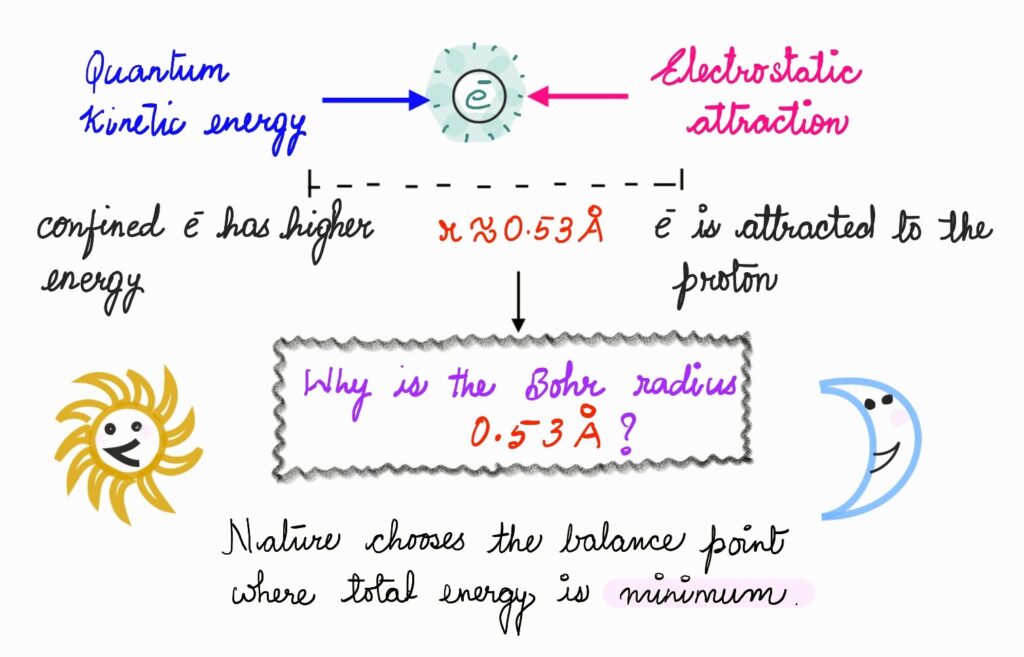
 If squeezing the electron is energetically expensive, shouldn’t the electron just keep moving farther and farther away?
 It would if kinetic energy is the only energy in the atom.
Imagine an electron very far from proton. Now you try to bring it closer to proton. Does proton help you or oppose you?
They are oppositely charged, so the proton helps by attracting the electron.
So the system releases energy as they come together. That is why the potential energy becomes more and more negative.
Where does the released energy come from?
From the potential energy of the electron–proton system. As the electric field does work on the electron, the system loses potential energy.
I see… if the PE were positive instead… the electron would not remain bound to the proton and there would be no atom.
But wait, bringing the electron closer also increases the uncertainty in its momentum.
Exactly, greater momentum uncertainty means greater kinetic energy.

Even the graphs can teach more.
Look at this graph:
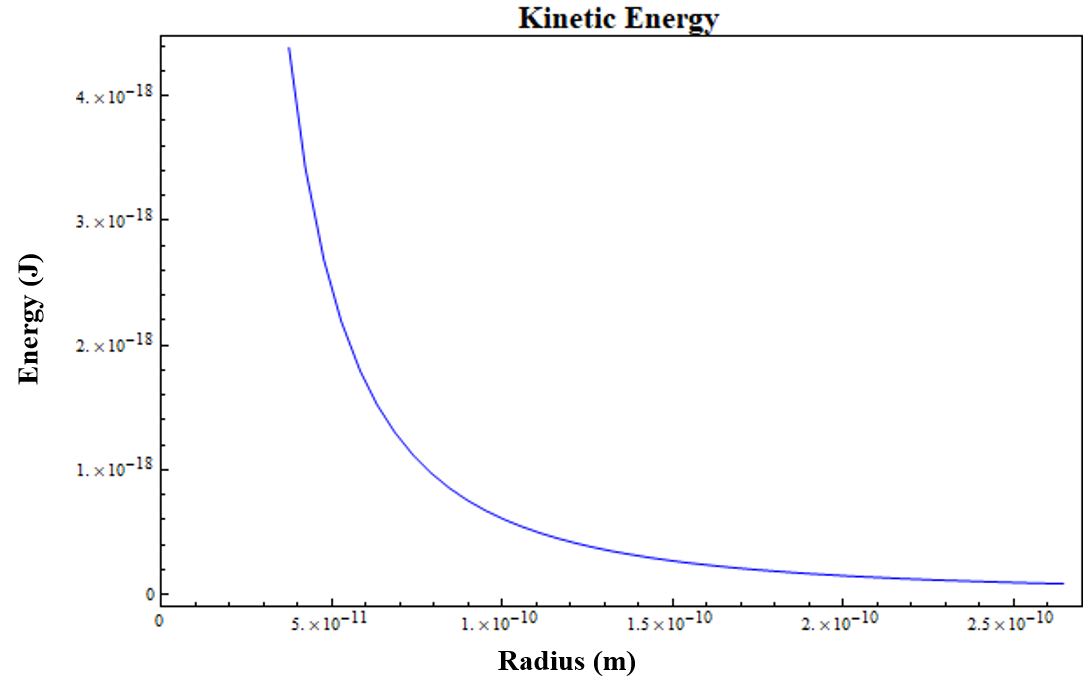
What do you notice?
The kinetic energy shoots up very rapidly as the radius decreases.
How does potential energy changes with radius?
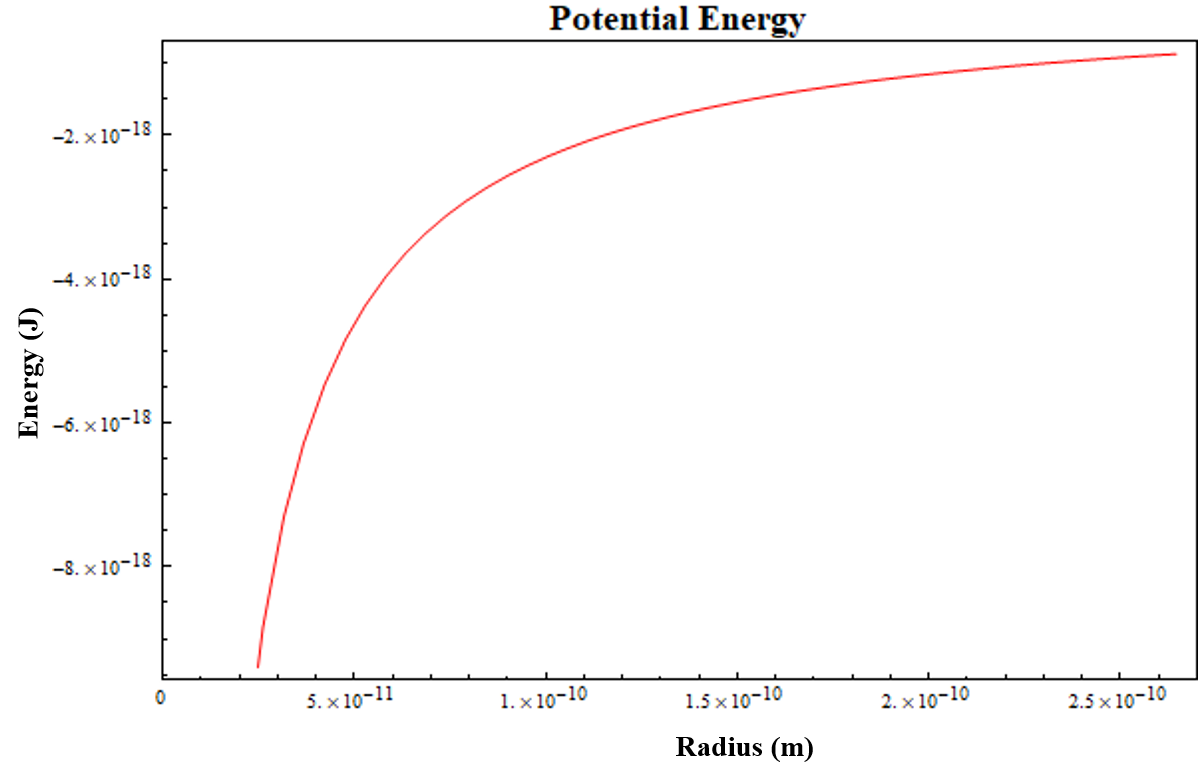
The PE decreases…
Ummm….. But, as the electron comes closer, the potential energy should increase as it is proportional to 1/r …..right?
Be careful, this is a very common mistake.
The potential energy has actually decreased.
The negative sign completely changes the interpretation.
As the electron falls toward the proton, the electron–proton system releases energy and moves to a lower-energy state. That is why the potential energy becomes more negative.
Never ignore the minus sign. It tells you the direction in which the energy is changing.
I understand each graph individually. But the atom has both types of energy at the same time. So… which one does Nature actually care about?
These graphs describe the two competing tendencies inside the atom. Nature doesn’t minimize kinetic or potential energy individually. It minimizes their sum, the total energy:
This gives us the following graph.
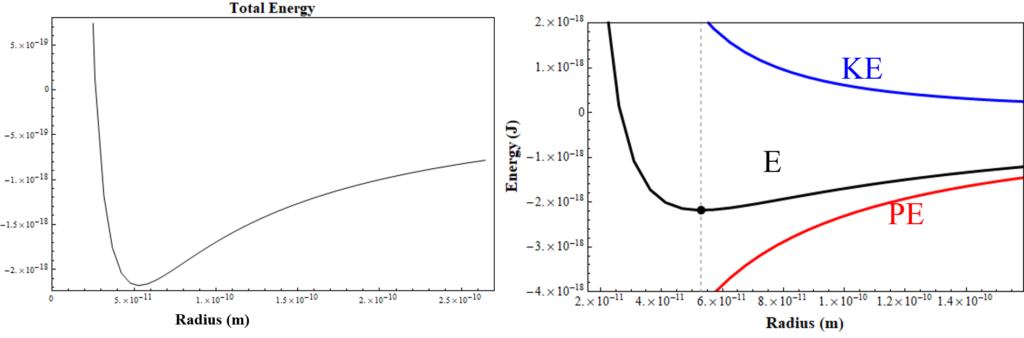
I can see the lowest point on the graph. But how can I find its exact value?
Whenever a smooth curve reaches a maximum or minimum, its slope becomes zero,
Ah… Solving the equation gives us:
And that’s the famous Bohr radius!
Numerically: 0.529 Å.
So the size of the hydrogen atom is not an arbitrary number.
Exactly.
It emerges naturally from the balance between quantum kinetic energy and electrostatic attraction.
Leave a Reply