 Electrons move around the nucleus in circular orbits just like how planets move around sun.
Is that how electrons really move?
 That’s what Bohr proposed. It was a brilliant model because it correctly predicted the allowed energies of hydrogen.
But quantum mechanics revealed something even more fascinating.
Ohh… is there much more to it?
Yes, an electron is not described as a tiny particle travelling along a well-defined circular path.
Instead, quantum mechanics describes the electron by a wavefunction.
A wavefunction?
Yes …I can recollect, electron has a dual nature just like light. And de Broglie introduced matter waves.
But if electron behaves like a wave why can’t we simply draw their paths?
Because waves are not described by trajectories. They are described by wavefunctions.
But how does a wavefunction tell us where the electron is?
It doesn’t tell us a trajectory.
Instead, the wavefunction contains all the information that quantum mechanics allows us to know about the electron.
From it, we can calculate the probability of finding the electron at different locations.
Hmm….… represents wavefunction and represents its probability density. But where this wavefunction comes from?
By solving Schrodinger equation.
I could recollect I solved couple of Schrödinger equations to get different wavefunctions. Now I am able to connect back.
Exactly, Do you remember how do we solve them?
A potential landscape is given and we substitute the potential expression in either Schrödinger time dependent equation or Schrödinger time independent equation based on whether V(r) or V(r, t).
Then we solve the equation and get solutions.
Exactly… and in the case of atom, potential is V(r) and is electrostatic potential. When we solve it, we get
Notice that the Schrödinger equation doesn’t give just one solution. It gives many different mathematical functions.
The allowed solutions of the Schrödinger equation are wavefunctions.
The simplest one is
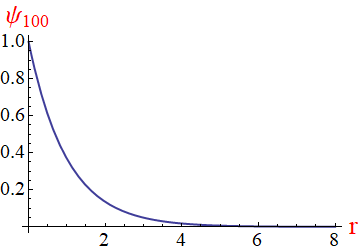
This is 1s orbital. Next, we have 2s orbital:
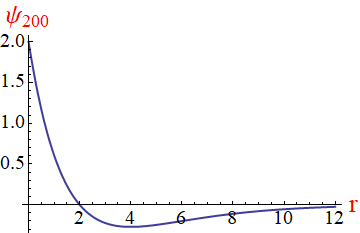
Notice that this solution has a completely different mathematical form.
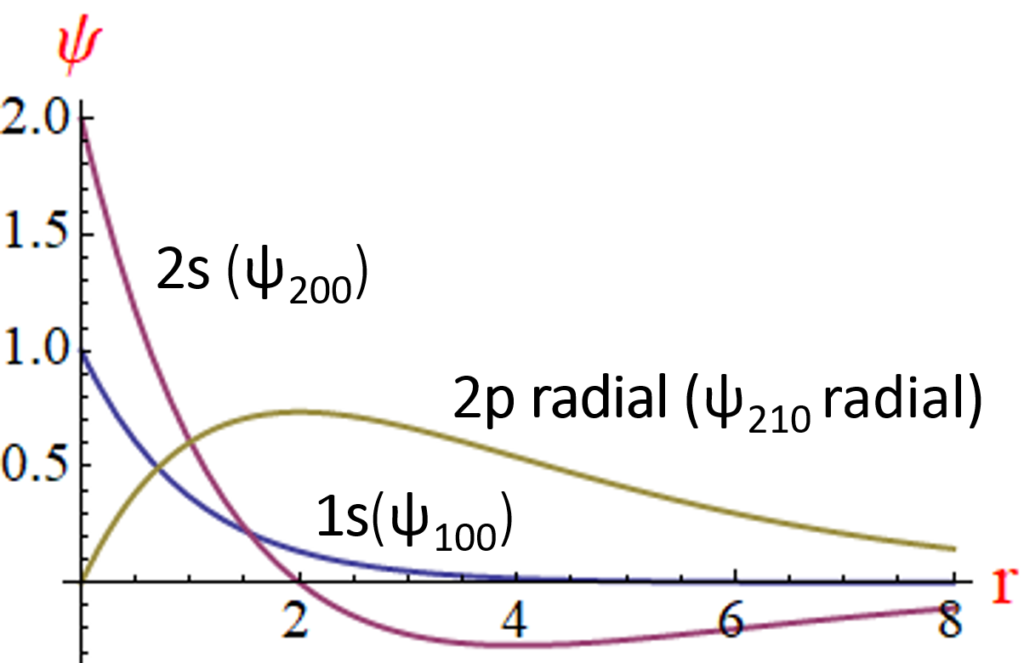
Next, observe these two plots
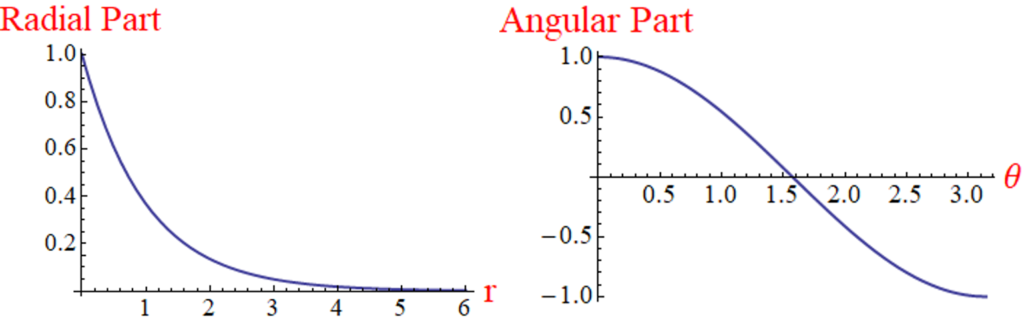
The first two wavefunctions () depends only on the distance from the nucleus. But this one also depends on direction.
We have,
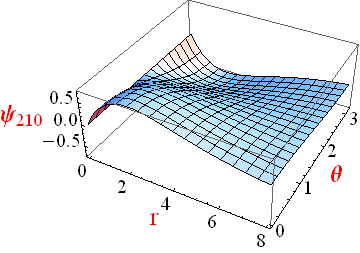
Unlike the and wavefunctions, this one depends on both and . This different mathematical form eventually gives rise to the familiar dumbbell-shaped orbital.
In general we can write:
is the radial part, determined by the Coulomb potential. (radial part plot).
are the spherical harmonics, which describe the angular dependence. (angular part plot)
This separation is possible because the Coulomb potential depends only on the distance from the nucleus:
So, each allowed solution of the Schrödinger equation is an atomic orbital.
Exactly.
An orbital is simply one of the allowed wavefunctions or equivalently, one of the allowed quantum states of the electron in the atom.
So we can say:
Coulomb Potential –> Schrödinger Equation –> Many Allowed Wavefunctions
Wait a minute.
We’ve been calling these orbitals and
Are these just convenient names given by physicists?
Or is there a reason why one is called and another ?
Excellent question.
These names are not arbitrary.
Every allowed solution of the Schrödinger equation naturally comes with a unique set of quantum numbers.
The familiar names and are simply a convenient way of representing those quantum numbers.
So quantum numbers are not assigned afterwards.
They naturally emerge while solving the Schrödinger equation?
Precisely.
They uniquely characterize each allowed quantum state.
Then I have one last question.
If every electron is identified by its quantum state…
can two electrons occupy exactly the same one?
That’s one of the most profound questions in quantum mechanics.
The answer is the Pauli Exclusion Principle.
But before we move on, remember the biggest takeaway from today’s discussion: an orbit is a path, but an orbital is a wavefunction obtained by solving the Schrödinger equation.
And that’s where our journey continues.
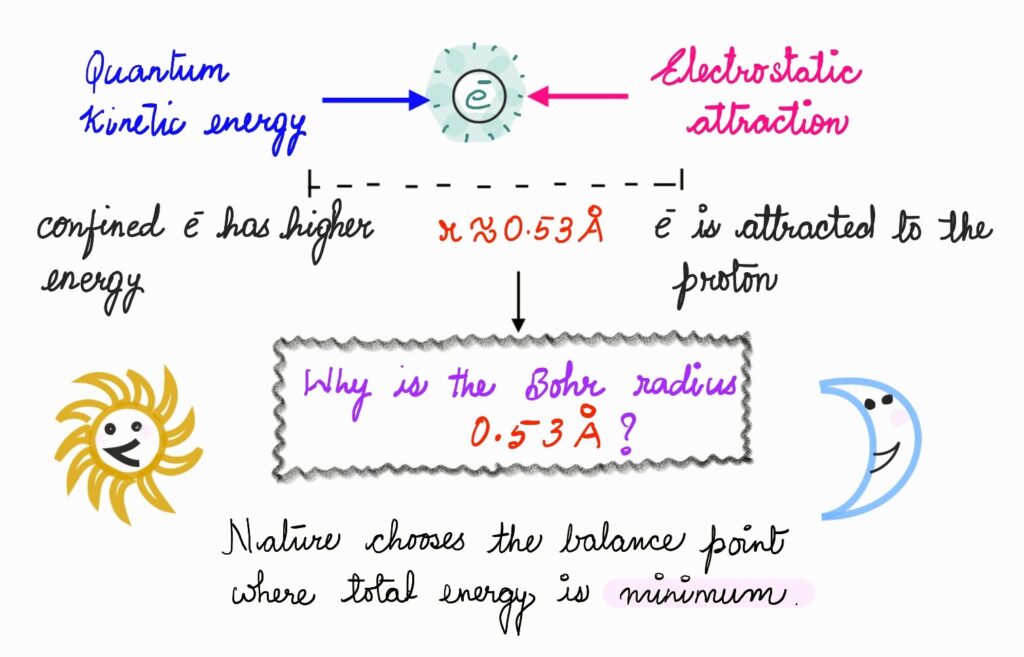

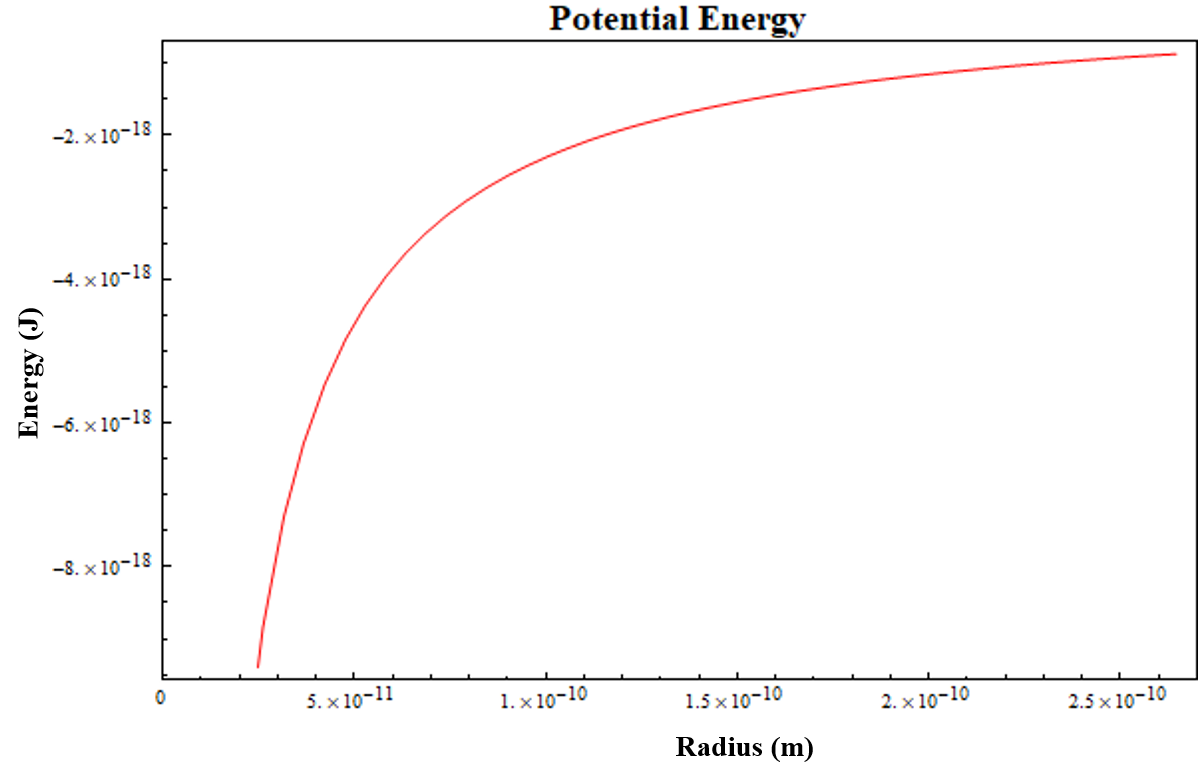
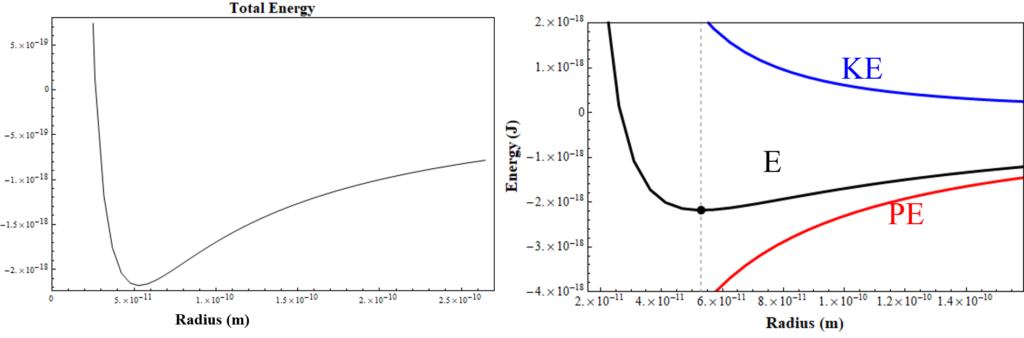
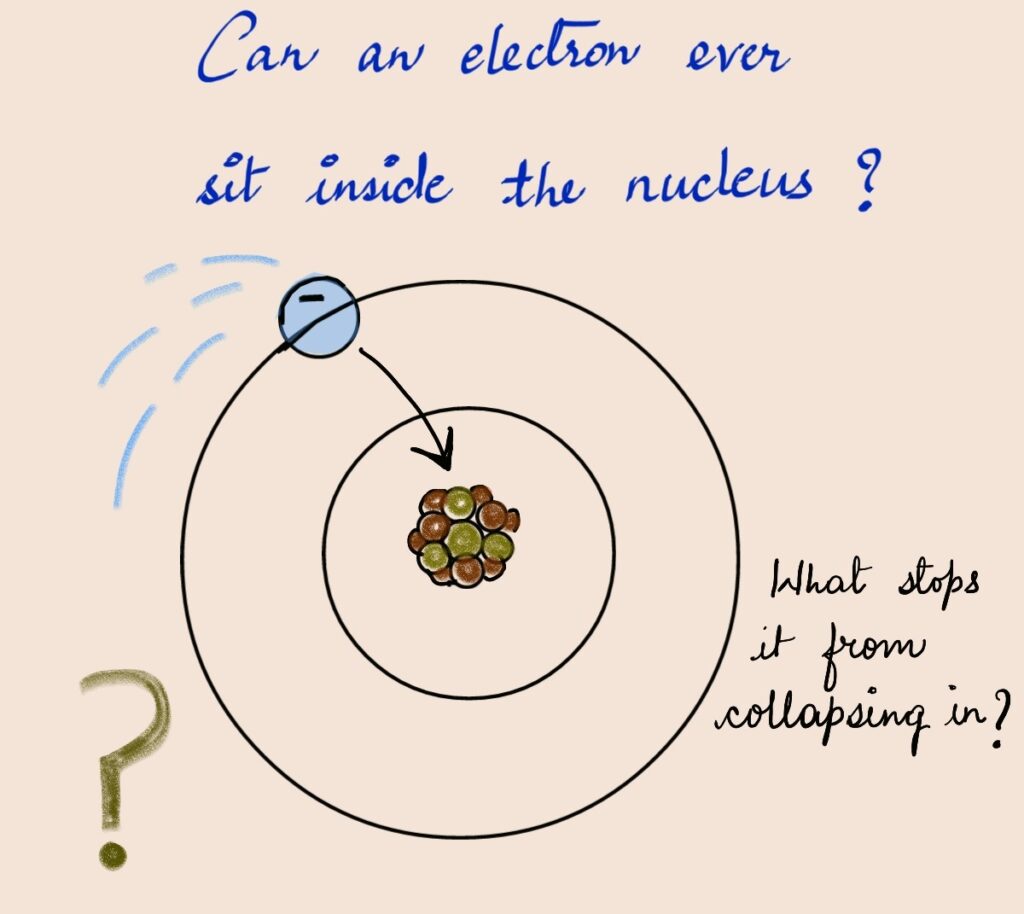




 and
and  represent the uncertainties in the electron’s position and momentum, respectively.
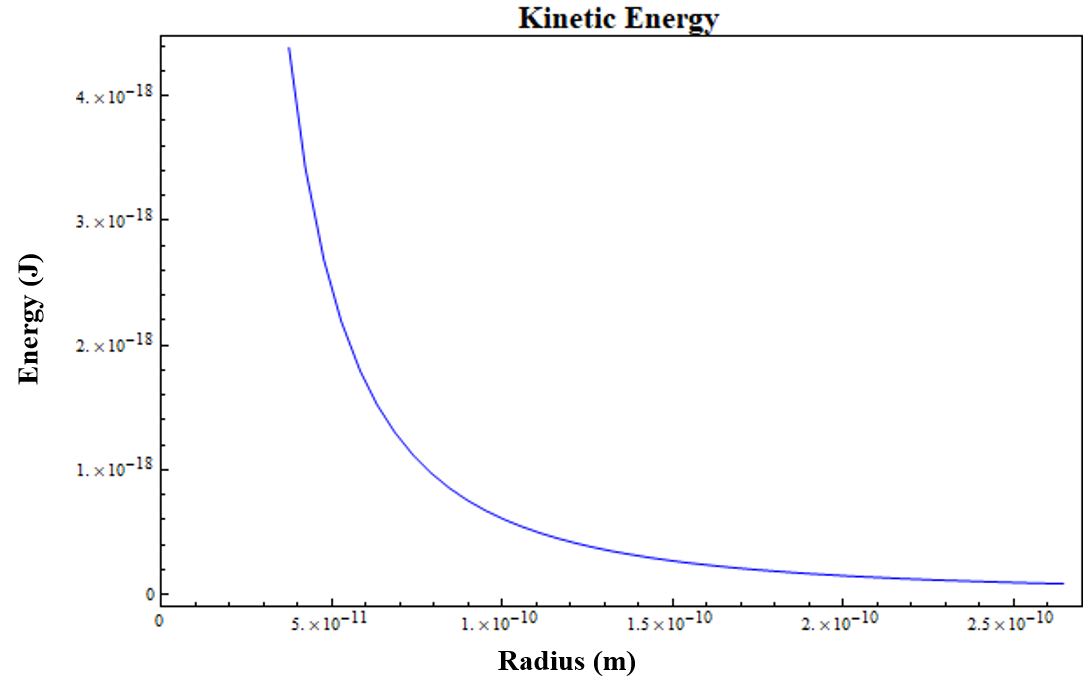
 across. That means, according to Heisenberg’s principle, such a tiny uncertainty in position demands an enormous uncertainty in its momentum and therefore an enormous kinetic energy.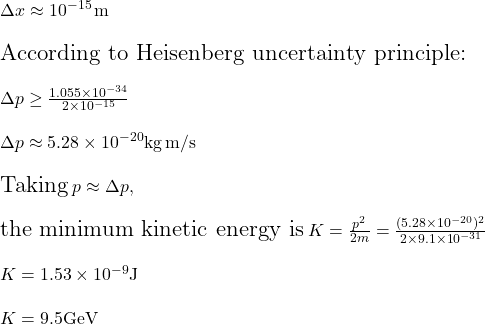
 are allowed, i.e.




 is the pressure created when a difference in concentration causes water to move through a semi-permeable membrane.